Should You Stay in a Hostel During Your Drop Year? The Honest Answer
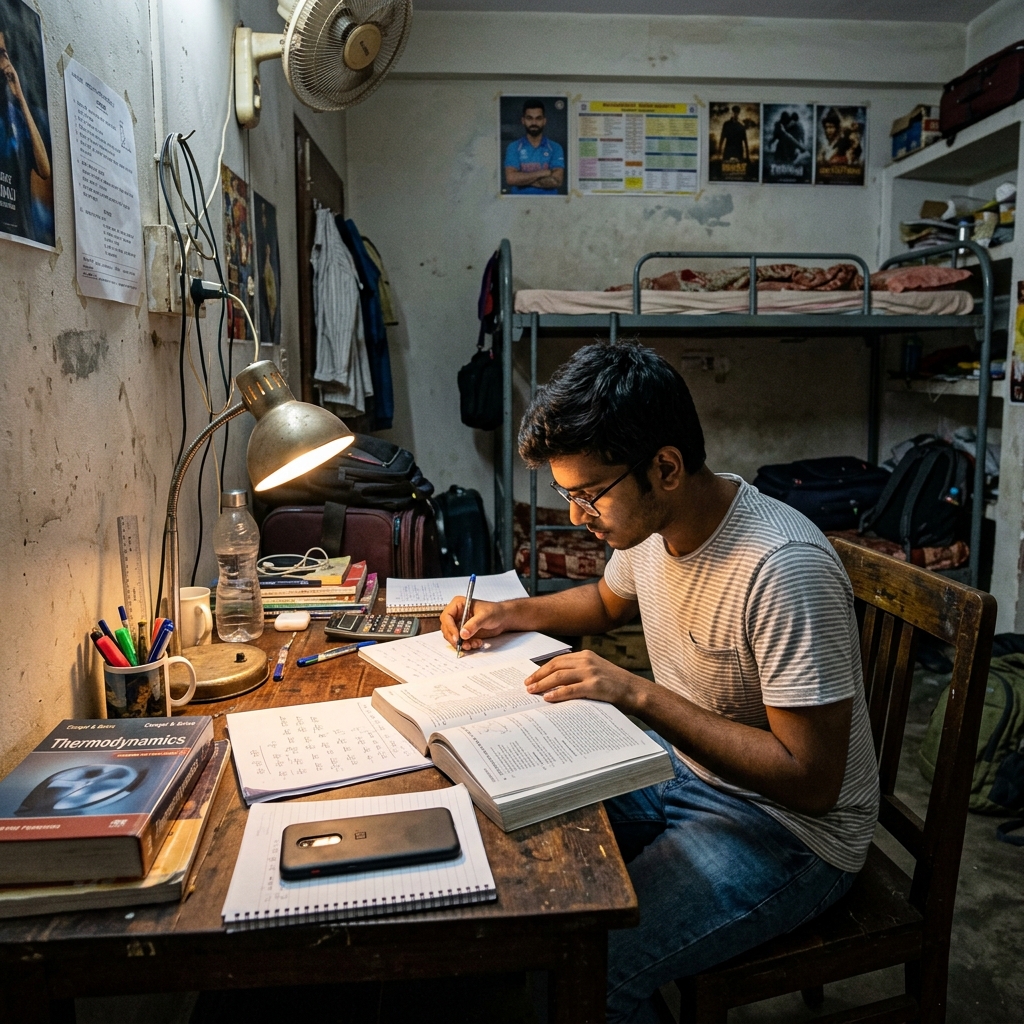
Nobody talks about how isolating a drop year can get.
You've just stepped out of school. Your batch has moved on — some are in colleges you wanted to get into, some are already posting hostel room setup photos. And you're back at home, staring at the same ceiling you've stared at for twelve years, wondering if studying here is even going to work.
For a lot of drop-year students, the real question isn't which coaching institute to join or which mock test series to follow. It's simpler and harder at the same time: where do I live this year?
Going to a hostel feels like a big move. Staying home feels like the safer choice. But safe doesn't always mean smart — especially when your rank depends on how consistently and deeply you can study over the next 10 to 12 months.
This article gives you the full, honest picture.
What This Article Covers
| Who should read this | Class 12 repeaters, JEE/NEET drop-year students, anyone considering moving out for focused preparation |
| What you'll get | A practical breakdown of hostel life during a drop year — costs, environment, roommate dynamics, common mistakes, and a clear decision framework |
| Key takeaway | A hostel isn't just a place to sleep. It's an environment decision — and that decision shapes how your entire year goes |
| Reading time | 14–16 minutes |
The Real Reason Students Consider a Hostel for Drop Year
It rarely starts with a master plan. Usually, it's one of two situations.
Either the student has enrolled in a coaching center far from home — Kota, Hyderabad, Pune, Delhi, Chennai — and moving into a hostel near the institute is the obvious practical choice. Or they're staying in the same city but feel like home is killing their focus. Noisy younger siblings, family functions, relatives asking about last year's result, a comfortable bed that's too easy to fall into at 2 PM.
Both are valid. And both have different answers.
A student from Nagpur who moved to Pune for NEET coaching put it simply: "At home, I was comfortable. Comfortable is the enemy of preparation."
That's not universally true — but it's true for a specific kind of student. Figuring out which kind you are is step one.
Hostel vs. Home vs. PG: The Real Cost Comparison
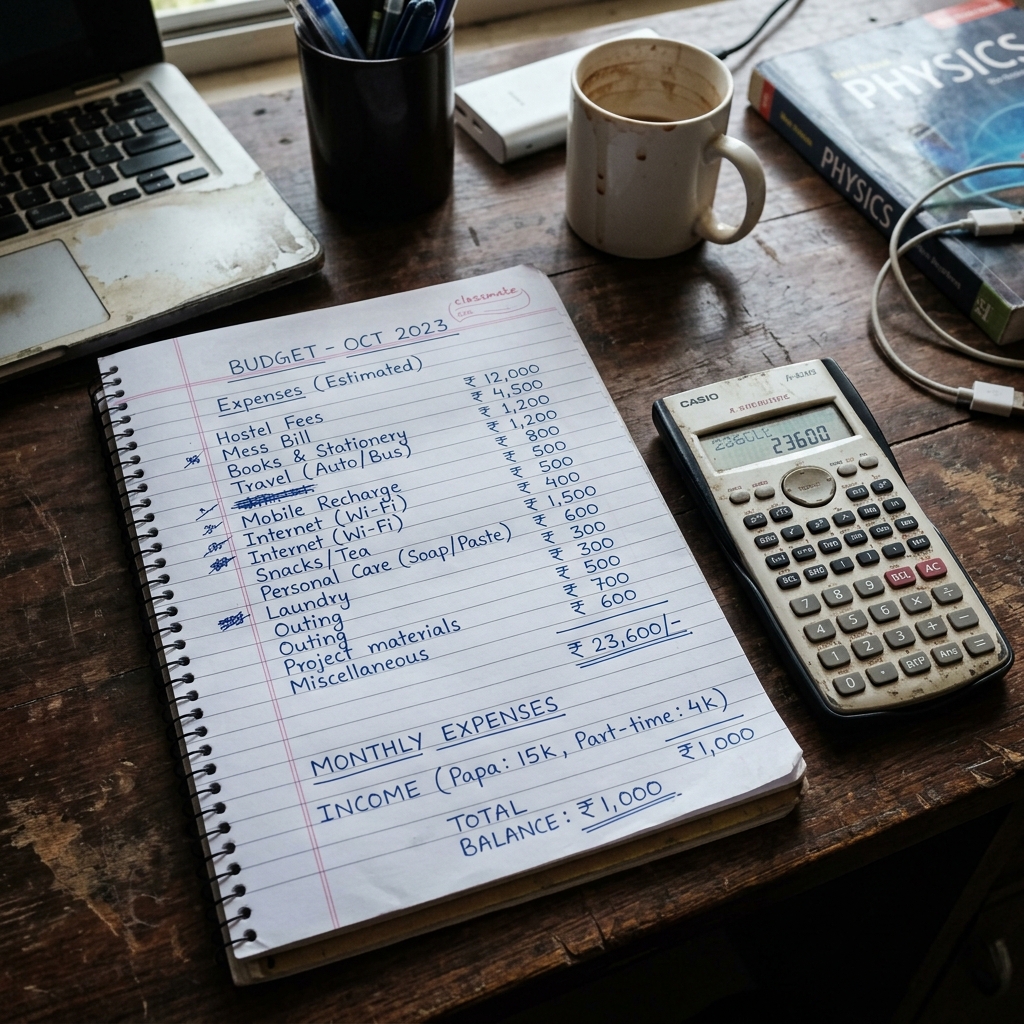
Before anything else, let's talk money — because that's usually the first thing parents bring up.
Interactive Cost Visualizer
Compare monthly budgets in Tier-2 Indian cities
*Tuned proportionally (100% PG, 80% Hostel, 40% Home) to match actual spending patterns.
Monthly Cost Breakdown (Approximate, Tier-2 Cities)
| Category | Home (Same City) | Hostel (Near Coaching) | PG Accommodation |
|---|---|---|---|
| Rent | ₹0 | ₹5,000–₹12,000 | ₹7,000–₹15,000 |
| Food | ₹1,500–₹3,000 | ₹2,000–₹4,500 (mess) | ₹3,000–₹5,000 |
| Transport | ₹1,500–₹3,000 | ₹0–₹500 (walking) | ₹500–₹1,500 |
| Laundry / Misc | ₹300–₹700 | ₹500–₹1,000 | ₹800–₹1,500 |
| Total (approx.) | ₹3,300–₹6,700 | ₹7,500–₹18,000 | ₹11,300–₹23,000 |
What this table doesn't show: the cost of a distracted year at home that results in another drop — or the cost of a bad hostel environment that makes things worse.
Numbers matter. But they're not the whole picture.
What Nobody Tells You About Hostel Life in a Drop Year
1Your roommate will make or break your year
This is not an exaggeration.
In a normal college hostel, a bad roommate is annoying. In a drop year, a bad roommate is catastrophic. You're already under pressure. You're already questioning whether you're good enough. Add someone who sleeps at 4 AM, has their phone on full volume, or has simply given up on serious preparation — and your own discipline quietly starts to erode.
At TownMate, we regularly hear from students who started their drop year with solid preparation schedules, only to slide by month two because their hostel environment pulled them down gradually — not all at once, just slowly enough that they didn't notice until it was too late.
Choosing a hostel isn't just about rent and amenities. It's about who you'll be sharing air with for 300+ days.
2Hostel freedom is a double-edged thing
At home, you have accountability — even if it feels suffocating. Someone asks if you've eaten. Someone switches off the TV when it's getting late. Someone notices if you haven't studied in three days.
In a hostel, nobody's watching. That's the upside and the downside.
For students with strong internal discipline, that freedom is fuel. For students who need external structure to function, that same freedom becomes procrastination.
Honest question: during Class 12, when you had no one checking on you — could you study for four straight hours on your own? Your answer tells you a lot about whether a hostel is right for you right now.
3Study environment within the hostel varies wildly
Not all hostels have quiet study hours. Some don't have study rooms at all. Some have great Wi-Fi, some have Wi-Fi that only works near the warden's office. Some have mess food that's genuinely good, some serve food that'll have you spending money on outside meals every other day.
Before committing to any hostel, physically visit after 9 PM on a weekday. That's when you'll see what the environment is actually like.
When a Hostel Makes Sense for Drop Year
You should seriously consider a hostel if any of these apply:
- Your coaching is in a different city. This is the clearest case. Kota, Pune, Hyderabad, Delhi — these cities draw students specifically because of coaching ecosystems. Being in the city means access to libraries, peer groups, test centers, and a culture of serious preparation that's hard to replicate anywhere else.
- Home has genuine focus problems. Not "I get distracted sometimes." If there's construction next door, a family situation that creates daily stress, a sibling whose exam overlaps with yours, or a city-wide social life you genuinely can't say no to — then physical distance might be the only way to create the mental space you need.
- You have historically needed peer motivation. Some students genuinely study better when they see others studying. If your best preparation in Class 12 happened during library sessions or school study halls — a hostel peer group can recreate that energy.
- You can manage basic life logistics independently. Hostel life requires you to manage your time, your food choices, your laundry, your health. If that genuinely overwhelms you and takes away from study time — factor that into the decision.
When a Hostel Is Probably Not the Right Call
| Situation | Why a Hostel May Hurt More Than Help |
|---|---|
| You've never lived away from home | Adjustment takes 4–8 weeks. In a drop year, that's time you can't afford |
| You have a strong home study setup | If your room is quiet and your family is supportive, you're already ahead |
| Budget is very tight | Hostel costs add up fast. Financial stress affects focus |
| You're someone who needs emotional support | Isolation hits hard in a drop year. Home has a built-in support system |
| Your coaching center offers online classes | No need to relocate if you can attend from home |
The Roommate Question — The Most Underrated Decision of Your Drop Year
Let's spend more time here because most students think about this for five minutes and then regret it for five months.
Finding a roommate who matches your study schedule and lifestyle preferences is not an option; it is a necessity for drop year survival.
Roommate Compatibility Quiz
How synced are your sleeping hours?
Roommate Compatibility: What Actually Matters
| Factor | What to Ask / Discuss Upfront |
|---|---|
| Sleep schedule | Do you study late nights or early mornings? Mismatched schedules kill both students |
| Study style | Silent study vs. verbal revision vs. group study sessions |
| Target exam | JEE students and NEET students often have completely different preparation intensities and timelines |
| Phone usage habits | A roommate who's on YouTube till midnight will affect your sleep |
| Cleanliness | Sounds small. Becomes huge in a 10x12 room after three months |
| Mental state | Someone who has already given up can pull a serious student down faster than any distraction |
| Friendship boundaries | Some students want a roommate who's also a close friend. Others want professional distance. Both are valid — but they need to match |
Finding someone who matches on most of these factors is not luck. It requires looking.
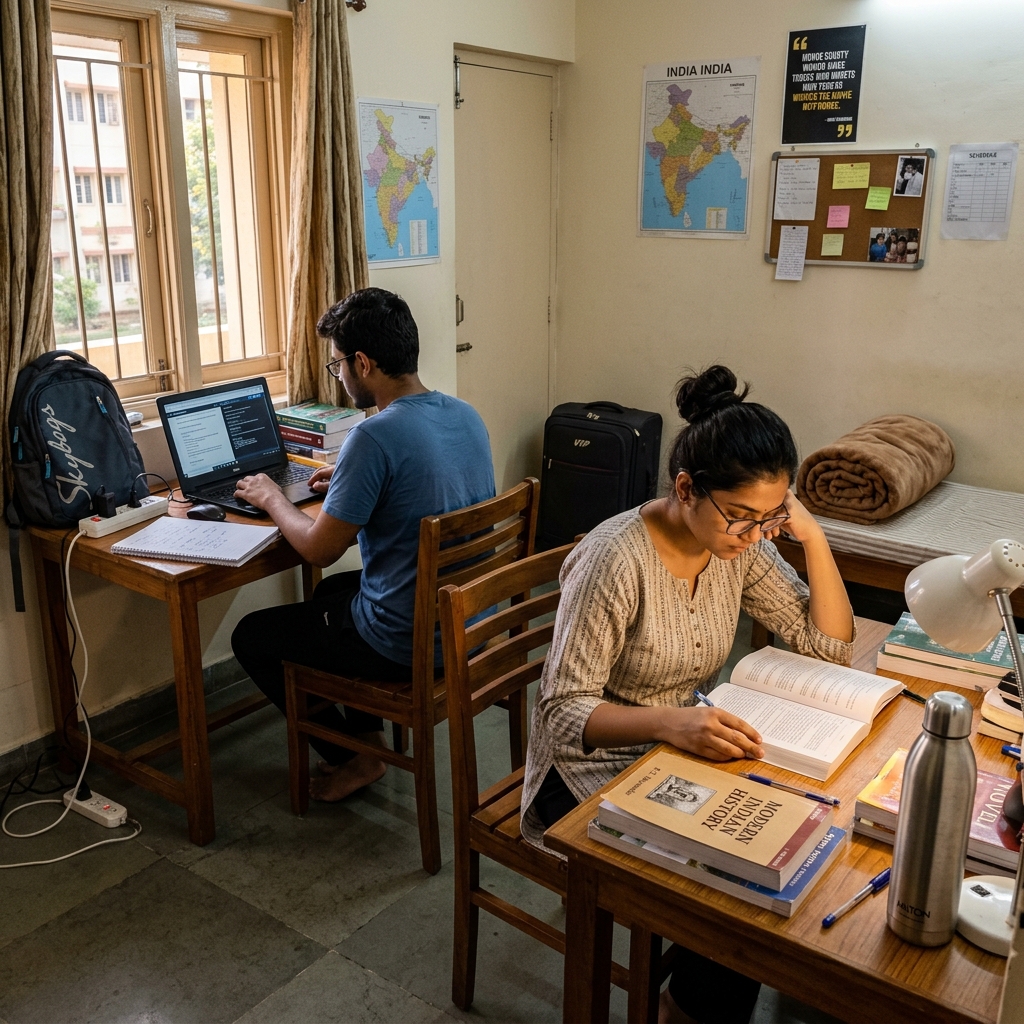
That's where platforms like TownMate come in. TownMate's roommate finder is specifically designed for students — whether you're looking for a hostel roommate, a college roommate, or a PG co-tenant, you can filter by exam target, city, study schedule, and lifestyle habits before committing to sharing a space. It's one of the few roommate finder India platforms built with students specifically in mind.
When you're using a hostel roommate finder, always have at least two conversations before finalizing — one about practical logistics, one about study habits and goals. You'll know quickly if it's a match.
Real Student Voices: What Drop-Year Students Actually Experienced
These are composite insights from students who've gone through drop years in hostels across India. Names have been changed.
"I thought Kota would fix my preparation because everyone around me would be serious. It does work — but only if you pick the right floor in the right hostel. My first hostel had a gaming culture on my floor. Three months in, I shifted. Second hostel was much quieter. My mock scores jumped by the end of month two in the new place."
"My biggest mistake was not being upfront with my roommate about my study hours. I studied from 5 AM. She slept till 9 AM. Within two weeks we were both annoyed with each other without saying it. We had that awkward conversation in month two that we should've had on day one. After that, things got better. Have the difficult conversation early."
"I stayed home. My mother made sure the house was quiet every day from 8 AM to 1 PM. My father stopped hosting guests on weekends. My family basically restructured their routines for my year. Not everyone has that. I was lucky. And even then, I had to stop using my phone cold turkey for three months. Home works — but it needs the same discipline a hostel demands."
"I used TownMate to find my roommate. We matched on study schedule and exam target. Turned out we were also from similar backgrounds, which helped a lot. Didn't become best friends, but we kept each other accountable. When one of us was slacking, the other would quietly just start studying and that was enough."
"The hostel mess food was terrible by month four. I was spending an extra ₹3,000–₹4,000 a month on outside meals, which I hadn't budgeted for. Always try the mess food before committing to a hostel. Ask current residents, not the warden."
Common Myths About Drop Year Hostels
Myth 1: "Kota/Pune hostel culture will automatically make me study harder"
Environment helps, but it doesn't replace internal motivation. Students who fail in good environments usually had the same problem they'd have had at home. The environment amplifies what's already there — it doesn't create it.
Myth 2: "Living alone (single room) is always better"
Single rooms cost significantly more. And for some students, the complete absence of another person leads to a stagnant, echo-chamber kind of isolation that kills motivation. A well-matched roommate can keep you anchored.
Myth 3: "Parents distract me — so any hostel is better than home"
A bad hostel will distract you far more creatively than your parents ever could. Be specific about what at home is affecting your preparation, and figure out if a hostel actually addresses that specific thing.
Myth 4: "I'll figure out the roommate thing after I arrive"
This is where students lose 4–6 weeks of prime preparation time — settling roommate conflicts, shifting rooms, adjusting to unexpected situations. Sort the roommate situation before you arrive.
Decision-Making Framework: Hostel or Home?
Use this interactive framework and table to structure your thinking.
Is your competitive coaching center located in a different city?
E.g., you live in Nagpur but coaching is in Pune/Kota/Delhi.
Direct Framework Checklist
| Question | Hostel Lean | Home Lean |
|---|---|---|
| Is coaching in a different city? | Yes | No |
| Do you have a quiet study space at home? | No | Yes |
| How's your self-discipline historically? | Strong | Still developing |
| Is your family supportive of your preparation? | Not particularly | Actively supportive |
| Do you get motivated by peer preparation energy? | Yes | No — it distracts |
| Can your family afford hostel costs comfortably? | Yes | Tight budget |
| Do you have a reliable roommate option? | Already found / can find | Unknown |
If you scored 5+ on the "Hostel" column: A hostel is likely the right environment for you.
If you scored 5+ on the "Home" column: Optimize your home setup before spending on a hostel.
Mixed result: The roommate and environment quality of the specific hostel will decide this.
Practical Action Plan: If You Decide on a Hostel
This is what the first month actually looks like if you do it right. Use the interactive calendar timeline below to check your monthly milestones.
Drop Year Roadmap Dashboard
Track your JEE/NEET milestones and hostel adjustment milestones by drop-year quarters.
August - Setup Month
Hostel Adjustment & Prep Advice
Set up study desk first before unpacking. Have the crucial boundary conversation with your roommate about sleep and phone use. Keep your social circle extremely small.
Week Before Moving
Research 3–5 hostel options. Visit each in person, ideally after 8 PM on a weekday. Check study room, Wi-Fi, mess quality (taste the food), and talk to at least two current residents — not the management.
Begin your roommate search. Use TownMate's college hostel roommate finder to filter by exam target, city, and study schedule. Have at least two detailed conversations before finalizing.
Day 1–3 After Moving
Set up your study desk first, before unpacking anything else. This is a psychological signal to your brain. Have the "expectations" conversation with your roommate — sleep schedule, phone hours, guests, cleanliness. Awkward but necessary.
Week 1
Don't over-socialize. Be friendly, but you're not there to make new friends — you're there to pass an exam. Identify one or two serious students in the hostel or floor. Their energy will be useful later.
Month 1
Assess honestly. Is the environment helping? Is the roommate match working? If not, address it now — not in month three. Most students wait too long to raise problems and end up absorbing the cost in their preparation.
Month 2 Onwards
Build a rhythm. Strict study hours. Know when the hostel gets loud and work around it. Find your peak performance window (morning or night) and protect it.
What Seniors Wish They'd Known
Expert Tip from a Coaching Faculty Member (Anonymous)
"Students who move into hostels and do well have one thing in common — they treat it like a professional assignment, not an adventure. They're disciplined about sleep, disciplined about food, and they've chosen a roommate carefully. The ones who struggle treat it like freedom from home rather than a tool for preparation."
Senior Student Advice (IIT Bombay, 2023 Batch)
"Visit the hostel once at 10 PM before paying anything. If you hear loud music and see people outside doing nothing, that's your answer. Also — talk to the warden AND the current students. Wardens tell you the rules. Students tell you the reality."
Common Mistake Alert
Most drop-year students choose a hostel based on Instagram reels, coaching institute proximity, or a friend's recommendation — without actually evaluating the study environment. The social vibe of a hostel should be the last thing you optimize for. Study culture comes first.
Frequently Asked Questions
Q.Is it better to live in a hostel or at home during a JEE drop year?
There's no universal answer. It depends on your home environment, self-discipline level, and whether your coaching is in a different city. Students with quiet home setups and supportive families often do just as well — sometimes better — than hostel students. Students who genuinely struggle with home distractions or whose coaching is in another city generally benefit from hostel life when they choose the right environment.
Q.How much does a hostel cost during a drop year in cities like Kota or Pune?
Expect ₹7,000–₹18,000 per month depending on the city, hostel type, and whether meals are included. Kota and Hyderabad tend to have more budget-friendly options due to the volume of students. Pune and Delhi run slightly higher.
Q.How do I find a good roommate for a hostel during my drop year?
Start early — at least 4–6 weeks before your move date. Use a dedicated roommate finder platform like TownMate, which lets you filter by exam target, study schedule, and city. Have direct conversations about sleep schedules, study habits, and phone use before agreeing to share a room.
Q.Can a bad hostel roommate actually affect my exam rank?
Yes, meaningfully so. Sleep disruption, noise, mismatched energy levels, and emotional friction all affect cognitive performance over time. Students who share space with a well-matched roommate report significantly less daily friction and more consistent study hours.
Q.Should I take a single room in a hostel for my drop year?
Single rooms offer maximum control over your environment but cost considerably more. If budget allows and you're someone who genuinely needs solitude to focus, it's worth considering. But many students find that one compatible roommate actually helps — providing quiet accountability without the chaos of a shared floor.
Q.What should I check when visiting a hostel before joining?
Visit after 8 PM on a weekday. Check: noise levels, Wi-Fi reliability, mess food quality, hot water availability, study room access, and security. Talk to at least two current residents outside the presence of management.
Q.Is the Kota hostel environment overrated for drop-year students?
For some students, yes. Kota's reputation is built on its top performers — but average students can also get lost in its highly competitive and sometimes stressful ecosystem. If you're someone who's easily demotivated by comparison, Kota's environment can backfire. Research the specific floor and batch culture of any hostel, not just the city.
Q.How do I use TownMate to find a hostel roommate?
TownMate's college hostel roommate finder lets you create a profile with your exam target, study schedule, city, and lifestyle preferences. You can browse compatible matches, filter by these parameters, and connect before committing to a room. It's built specifically for students — not generic housing platforms.
Q.What if I'm homesick in a hostel during my drop year?
Homesickness peaks in weeks two and three for most students, then stabilizes. Building a small daily routine helps — a fixed call time with family, a short walk after dinner. What doesn't help is going home every weekend, which resets the adjustment process each time.
Q.Can I study for JEE or NEET without a coaching hostel and still succeed?
Absolutely. Coaching hostels are convenient but not required. Students who build strong home environments, follow structured schedules, and use the right study resources perform well from home every year. The environment matters — not its specific location.
Q.How early should I sort out hostel accommodation for a drop year?
At least two months before your planned start date. Good hostels with the right environment fill up fast, especially in cities like Kota and Pune. Waiting until the last minute means settling for what's available, not what's right.
Q.Is a PG better than a hostel for a drop year student?
A PG gives you more independence and sometimes better food, but often costs more and provides less community. Hostels offer a peer group, which is valuable for motivation. The right choice depends on whether you want structure (hostel) or flexibility (PG). Avoid PGs where you don't know the other tenants — vetting the environment matters just as much there.
Explore More Student Guides & Resources
Check out these articles worth reading to help plan your drop year setup and find the right roommate: