
Complete Packing Checklist for Hostel Students: The One That Actually Works
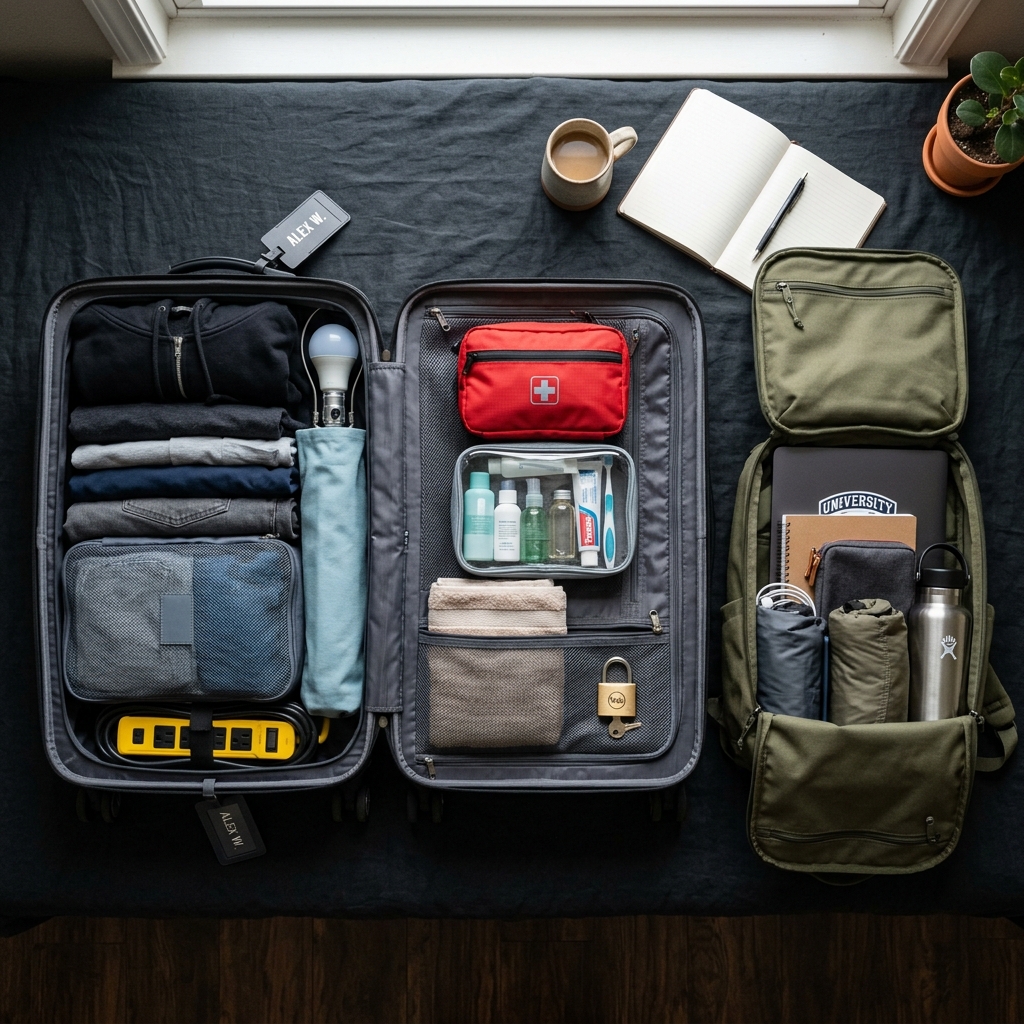
Quick Reference Card
What this covers
A full, priority-ranked hostel packing checklist — documents, tech, bathroom, room setup, medical kit, and smart roommate coordination.
Who should read it
First-year students moving into a hostel or PG, students changing hostels, parents helping their kids pack.
Key takeaway
Most students overpack clothes and underpack utility. The gap between a functional hostel room and a miserable one is three extension boards and one conversation with your roommate.
Rahul packed four pairs of formal trousers for his first hostel move to Nagpur. He wore them zero times in the first semester. What he didn't pack was an extension board — and since his hostel room had exactly one working plug point, he spent the first two weeks charging his phone in the corridor.
This is not an unusual story. At TownMate, we've heard versions of it constantly — students spending three hours carefully folding clothes they'll never wear, then scrambling on day two because they forgot a basic torch, a bucket, or a lock for their cupboard.
The complete packing checklist for hostel students that actually helps isn't about listing every possible item. It's about understanding why certain things matter in a hostel environment specifically, knowing what you can skip, and — critically — knowing what to coordinate with your roommate before either of you buy a second electric kettle.
This guide is built from real hostel experience across cities like Pune, Delhi, Hyderabad, Kota, and Bangalore. The priorities here are calibrated for the Indian hostel reality, not a generic international student dorm. You can read more about how student living options differ in our complete analysis of Hostel vs PG vs Flat for Indian students.
The Hostel Packing Problem Nobody Talks About
Most packing guides online are written by people who've never lived in an Indian college hostel.
They'll tell you to bring "decorative items for your room." Most Indian hostels have rules against drilling walls or putting up anything with adhesive. They'll tell you to bring a coffee maker. Your room likely has one power point, shared between a phone charger, a laptop, and a table fan.
The real challenge of hostel packing isn't quantity. It's relevance.
Students consistently make one of two mistakes. The first is packing for home — bringing everything they use in their bedroom at home, without accounting for the fact that a hostel room is roughly one-third the size and usually shared with at least one other person. The second mistake is under-packing out of nervousness, then spending the first week buying things in an unfamiliar city at marked-up prices.
Both are avoidable with a bit of deliberate planning.
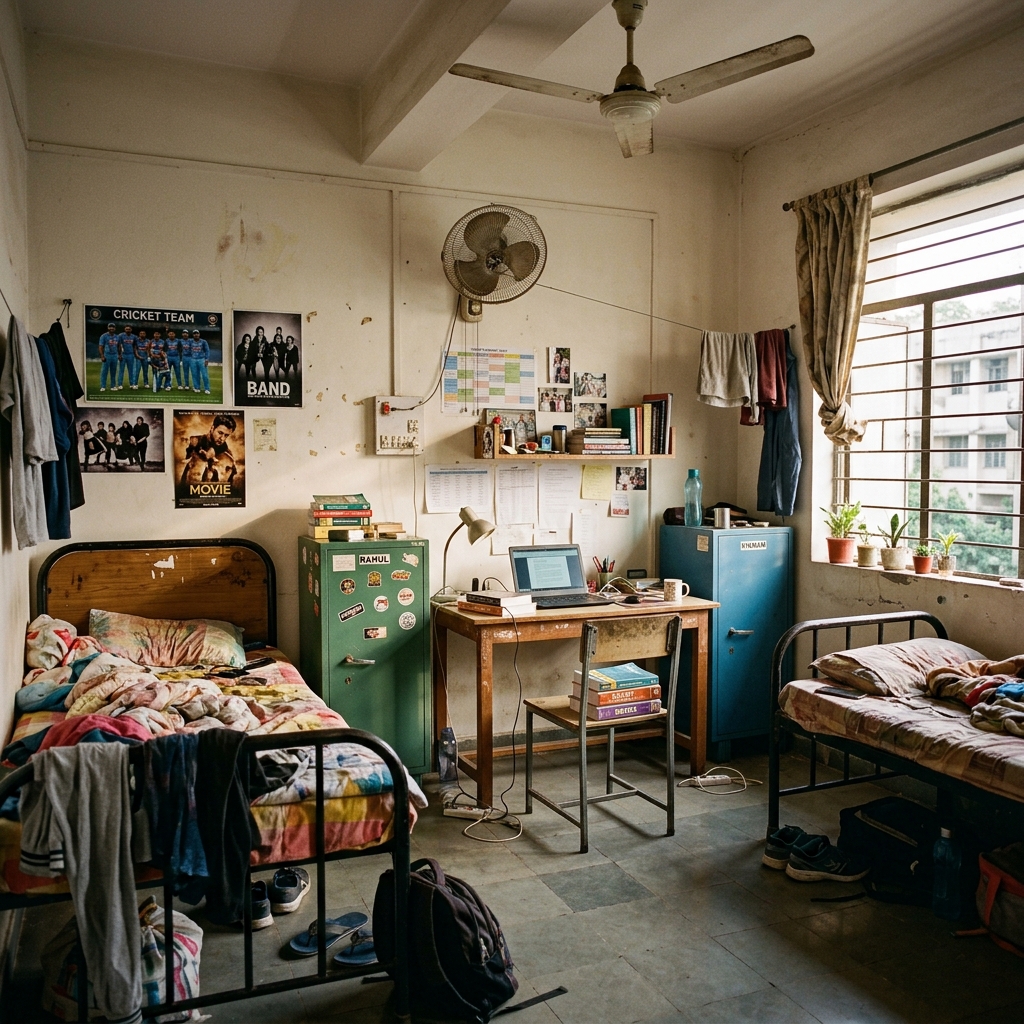
The Survival Kit Matrix: What Actually Belongs in Your Bag
Rather than one long unstructured list, use this matrix. Items are sorted by Priority Tier so you know what to pack first, what to plan around, and what can wait.
| Item | Why It's Critical in a Hostel | Common Mistake |
|---|---|---|
| Original documents (Aadhar, marks, admission, medical certificate, parent ID) | Required for hostel registration, police verification, medical emergencies | Keeping only photocopies and sending originals by courier later |
| Padlock (2 units) | Most hostel cupboards and rooms have basic hasp locks — bring your own padlock | Assuming the hostel provides one |
| Extension board (3-pin, 4 socket, surge protected) | Hostel rooms average 1–2 plug points for 2 people and 4–6 devices | Buying a cheap one that trips on the first rainy night |
| Laptop / tablet with charger | Study, notes, research — non-negotiable | Forgetting the charger or bringing only a phone |
| Prescription medicines (3-month supply) | Hostels in new cities don't always have your specific medication readily available | Planning to buy there without knowing local pharmacy options |
| Bank details, UPI setup, and emergency cash (₹1,500–2,000) | First-day expenses are always cash-heavy before you find ATMs | Depending entirely on UPI in areas with unreliable connectivity |
| Bedsheet set (2 sets) and pillow | Most hostels provide a mattress, nothing else | Assuming bedding is provided or that one set is enough |
| Item | Notes |
|---|---|
| Bucket and mug (medium size) | Non-negotiable in most Indian hostels. Taps have pressure issues. |
| Bathroom slippers (rubber, sturdy) | Shared bathrooms. No further explanation needed. |
| Quick-dry microfiber towels (2 units) | Cotton towels don't dry fast enough in humid hostel bathrooms |
| Laundry bucket with detergent | Many students hand-wash initial loads |
| Clothes hangers (6–8) | Hostel cupboards have a single rod. You'll need more than you think. |
| Small torch / headlamp | Power cuts happen. Your phone torch drains battery fast. |
| Water bottle (steel, 1 litre minimum) | Hostel water coolers are shared and often far from rooms |
| Basic stationery kit | Pens, highlighters, sticky notes, stapler — buy before arriving |
| Study lamp / LED desk light | Hostel overhead lighting is usually one weak bulb |
| Clothespin clips (10–12) | For drying clothes on the window grill or rope |
| Item | Priority Level | Notes |
|---|---|---|
| Small alarm clock (physical) | Medium | Don't rely entirely on phone alarm if you're a heavy sleeper and charger is far from bed |
| Ear plugs / noise-canceling earphones | High | Hostel noise is real. Morning study requires this. |
| Door stopper | Low | Useful if your hostel room door doesn't stay shut |
| Sticky hooks (tension-type, no drilling) | Medium | For hanging bags, towels, keys near the door |
| Small whiteboard or cork board | Low | For pinning timetable, deadlines — only if space allows |
| Sleeping mask | Medium | For afternoon naps when your roommate keeps the light on |
| Small umbrella (collapsible) | High in rainy cities | Non-negotiable in Mumbai, Chennai, Pune during monsoon |
| Item | Why You Need It |
|---|---|
| Paracetamol (strip of 10) | The first thing you'll reach for |
| ORS sachets (5–6 packets) | Hostel food changes cause stomach problems in the first month |
| Antacid tablets | Same reason as above |
| Basic antiseptic cream (Betadine or similar) | Small cuts and scrapes happen in shared spaces |
| Band-Aid strips (10 pack) | Very useful, very forgettable |
| Cold and cough tablets (your brand) | Everyone gets sick in the first semester |
| Digital thermometer | Know your temperature before you decide if you need to visit a doctor |
| Personal prescription medication | Three-month supply minimum |
Expert Tip
Keep your medical kit in a small pouch separate from your main bag. When you're sick at midnight, you don't want to rummage through a 30 kg suitcase to find a strip of paracetamol. A labeled zip pouch on your desk or in the top drawer is the smartest organizational decision you'll make.
The Apparel Reality Check: How Much Clothing Do You Actually Need?
This section exists because clothing is where most students pack wrong in both directions. Here is the honest breakdown of what you need versus what most students bring:
| Category | What Most Students Pack | What You Actually Need |
|---|---|---|
| Casual daily wear | 10–14 sets | 7–8 sets (with weekly laundry) |
| Formal clothes | 3–4 sets | 1–2 sets (for presentations, interviews, college events) |
| Sports/gym wear | 2–3 sets | 1–2 sets if you'll actually use them |
| Ethnic wear | 2–3 full outfits | 1 outfit for festivals or cultural events |
| Footwear | 4–5 pairs | 2–3 pairs (daily sneakers, bathroom slippers, 1 formal pair) |
| Jackets / hoodies | 3–4 | 1–2 depending on city (Delhi needs more, Hyderabad less) |
The math is simple. Hostel cupboards are small. You will not have space for 14 sets of clothes and all the other items on this list. Prioritize utility over abundance.
"I brought so many clothes that my books didn't fit in the cupboard. I had to stack them under the bed where they got dusty. I wish someone had told me to pack half the clothes and twice the stationery."— A student preparing for NEET in Kota
The Roommate Split Protocol: What You Should Actually Coordinate Before Arriving
This section is unique to shared hostel or PG living — and it's consistently the most ignored part of pre-hostel preparation.
Here's the reality: two students moving into the same room, without coordination, often arrive with two electric kettles, two irons, two shoe racks, and two sets of cleaning supplies. Meanwhile, neither has brought a working extension board.
If you've found your roommate through TownMate's college hostel roommate finder or any other platform, have this conversation before either of you shops. Detailed guidance on setting these parameters is available in our resource on how to establish ground rules with your roommate.
| Item | Who Brings It | Notes |
|---|---|---|
| Electric kettle | Roommate A | Only one needed. Coordinate. |
| Iron box | Roommate B | One is enough for two people |
| Shoe rack | Roommate A | One 3-tier rack handles 2 people's footwear |
| Floor mat | Roommate B | One per room |
| Cleaning supplies (broom, dustpan, mop cloth) | Roommate A | Split cost, share use |
| Small bin with lid | Roommate B | One per room is fine |
| Extension board | Each student brings own | This is the one item where two is not a problem |
| Room freshener | Coordinate on preference | This causes more disagreements than expected |
| Bucket (washing) | Each brings own | Personal hygiene item, don't share |
When students use the TownMate hostel roommate finder to connect with their future roommate, one of the most common pieces of feedback is that this coordination conversation — before anyone steps foot in the hostel — saves both money and embarrassment on arrival day.
The Roommate Split Protocol
Student A Brings
- Electric Kettle
- Shoe Rack
- Cleaning Supplies (Broom/Mop)
Student B Brings
- Iron Box
- Floor Mat
- ️ Small Bin with Lid
Both Bring (Personal)
- Extension Board (1 per student)
- Room Freshener (Agree on scent)
- Bucket & Mug (Personal hygiene)
City-Specific Packing Adjustments
A first-year student heading to Shimla for college needs five warm layers minimum. A student moving to Chennai needs approximately zero of those. Packing a standard list without accounting for your destination is a guaranteed mismatch. Let's look at some key cities:
| City / Region | Climate Adjustment | Additional Items |
|---|---|---|
| Delhi / NCR | Extreme cold in winter (Nov–Feb), hot summers | Woolen blanket, thermals, heavy jacket |
| Mumbai / Coastal | High humidity year-round, heavy monsoons | Waterproof bag cover, extra rubber slippers, fast-drying clothes |
| Pune | Moderate, pleasant but rainy monsoon | One warm jacket, good umbrella |
| Kota / Rajasthan | Extreme heat in summer, cold winters | Room cooler (if allowed), thermals |
| Bangalore | Cool year-round but surprisingly cold evenings | Light jacket, warm layer for nights |
| Hyderabad | Hot summers, pleasant winters | Focus on breathable fabrics, basic cooling items |
"I came from Rajasthan. I had no idea what 85% humidity feels like in June. My cotton clothes wouldn't dry. My books were slightly damp. No one in my family had thought to mention a dehumidifying silica gel pack for the cupboard. Small thing, massive quality-of-life difference."— A medical student moving to Mumbai for MBBS
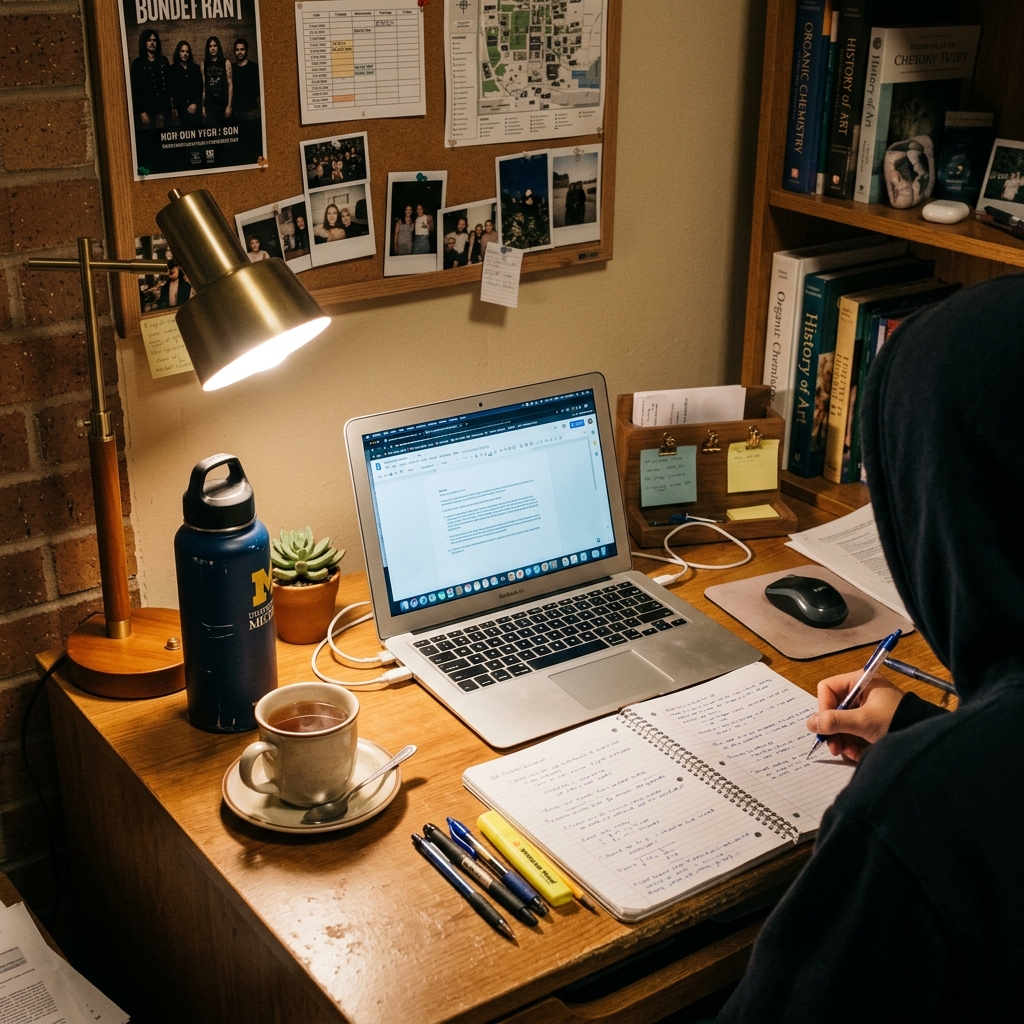
Student Voices: What Hostel Life Actually Taught Them About Packing
"The thing nobody tells you is that hostel bathroom shelves are either nonexistent or tiny. I came with a full skincare and toiletry setup in various bottles. None of it fit anywhere. I now use a hanging toiletry organizer that hooks over the door. That one thing changed my bathroom routine completely."
"I thought I was being smart by not packing too much. I didn't bring a study lamp because I figured the room light would be fine. Hostel room lights are designed by people who have never studied under them. By week two I was reading everything on my laptop just to have a better light source. Buy a good desk lamp. Non-negotiable."
"Winter in Delhi hits differently when you're in a hostel room with gaps in the window frame. I had brought one light blanket because I packed in September. By November I was sleeping in three layers of clothes. Pack for the full year, not just the season you're moving in."
"At coaching in Kota, the room is basically your entire world for 10 months. I underestimated how much the room setup matters for studying. The one thing I'm glad I brought was a small whiteboard — I put it on the desk, used it for formula revision every night. When I found my roommate through a college hostel roommate finder, we agreed on quiet hours and which side of the desk belonged to who. That small conversation prevented probably 40 conflicts."
"Medical college is a different level of intensity. I wish someone had told me to pack more than one set of whites. They get dirty fast and washing them takes time. Also, a basic sewing kit. Buttons fall off, zippers get stuck, and the nearest tailor is not always nearby. Sounds minor. Not minor at 7 AM when you have to be in wards."
What Seniors Wish They Had Known: Original Insights
The Single Outlet Trap
Almost every hostel room in India has one or two functional plug points per room. You will have: a phone charger, a laptop charger, a table fan or cooler, and possibly a study lamp. That's four devices for one point. If you bring a single power strip, you solve this. If you don't, you'll spend two weeks making a rotation schedule with your roommate for who charges what when.
The Maggi Utility Index
This is a real framework that students who live in hostels for multiple years develop: before you pack any kitchen item, ask yourself whether it can make Maggi. If you need something more specialized — a full pressure cooker, a set of pans — reconsider. Hostel rooms aren't kitchens. An electric kettle and one small kadhai (if allowed) covers 80% of what students actually cook.
The Lock You'll Regret Not Buying
Most students bring one padlock for their cupboard. What they forget is: the cupboard has two sections, or the room itself needs locking sometimes, or they need to secure a bag during travel. Buy two padlocks of the same brand so the key works for both. And keep one spare key with someone you trust in the hostel.
The Smell Problem
Hostel rooms can develop a specific smell from damp clothes, shared bathrooms, and closed windows. A small pouch of silica gel in the cupboard, a room freshener spray (not the automatic one — it runs out fast), and drying clothes fully before folding prevents this. Nobody talks about it in packing guides. It's one of the most quality-of-life-relevant things to plan for.
The Hostel Packing Priority Matrix
- Extension Board
- Original Documents
- Padlocks
- Essential Medicines
- Study Lamp
- Hanging Organizers
- Storage Containers
- ️ Basic Sewing / Stationery Kits
- ️ Lightweight Room Decor
- Comfort Slippers / Mask
- Small Desktop Mirror
- Extra Formal Clothes
- Specialized Appliances
- Past Semester Books
The Countdown-to-Departure Action Plan
T-Minus 14 Days: Procurement and Decision-Making
Start with the Tier 1 essentials. Buy what you don't already own. Gather all documents and make three sets of photocopies. Contact your roommate (if known) and run through the shared items list. Decide who brings what.
If you haven't found a roommate yet, search properly on a structured platform like TownMate's college roommate finder where you can filter by college, batch, and city.
T-Minus 7 Days: The Suitcase Tetris
Pack everything you think you're bringing. Then pull out anything you haven't used in the last two months at home. Clothes especially. Weigh your bags. Most students are overweight by this point. Now remove. The goal: one suitcase (65–70L), one backpack (30–35L), and a small personal bag for valuables.
T-Minus 2 Days: The Tech and Document Audit
Charge and check all devices. Download offline maps, your college's app, TownMate (if using it for roommate coordination), and your bank app. Confirm your hostel arrival time. Make sure you have two forms of payment. Keep all documents in a single folder in your backpack, not scattered between bags.
Day of Arrival: Unpack Smart, Not Fast
Don't unpack everything on arrival day. First, check the room condition — note any existing damage and photograph it. Then set up Tier 1 items: lock on cupboard, extension board, charging setup, bedding. Only after that handle clothes and secondary items.
The biggest mistake students make on arrival day is socializing for four hours and then trying to unpack a chaotic suitcase at midnight before a 7 AM lecture the next day.
Common Mistake Alert
Students frequently unpack everything into the cupboard without first planning the space. If you share a cupboard, divide shelves with your roommate before either of you puts anything in. Reorganizing a full cupboard is three times the work of organizing it empty. Five minutes of planning on day one saves a recurring argument for the rest of the semester.
What Not to Pack: The Skip List
This is the section most guides don't write because it's more useful than any checklist.
| Item | Why You Should Leave It | Alternative |
|---|---|---|
| Multiple appliances (mixer, cooker, toaster) | Power load restrictions, space issues, hostel rules | Electric kettle covers most cooking needs |
| Heavy decorative items | Hostel rules + space + risk of damage | 2–3 small, lightweight personal items only |
| Physical books from previous classes | Weight, space, no use | Cloud storage, PDFs, e-books |
| More than 2 pairs of formal shoes | They take enormous space and go unused | 1 formal pair is enough |
| Fragile items (glass frames, ceramics) | They break in transit and add no utility | Phone photos on your lockscreen |
| A full iron | Heavy, may not be allowed, shares with roommate | Coordinate with roommate to bring one between you |
Pack This, Skip That
Pack This (High Utility)
- Extension Board
- Microfiber Towels
- Padlock
- Study Lamp
- Small Medical Kit
Skip That (Low Utility / Heavy)
- Formal Trousers (4 pairs)
- Mixer / Heavy Cookware
- ️ Heavy Room Decor
- Extra Appliances
- Physical Books from past classes
Frequently Asked Questions
What is the most important thing to pack for a hostel?
An extension board. Not kidding. The number of hostel rooms in India with a single functioning plug point is higher than you'd expect. After that: a padlock, bedsheet set, and a basic medical kit.
How many sets of clothes should I bring for a hostel?
Seven to eight sets of daily wear is enough for weekly laundry. More than ten sets creates a storage problem in standard hostel cupboards without adding real value.
Should I bring a laptop or is a phone enough for college hostel life?
For most courses, a laptop is essential. Notes, submissions, research, internship applications — these are difficult to manage on a phone screen. Prioritize bringing a working laptop over almost any other tech item.
How do I coordinate shared items with my hostel roommate before arriving?
If you've connected with your roommate through a platform like TownMate's hostel roommate finder, message them specifically about the shared items list: electric kettle, iron, shoe rack, cleaning supplies. Divide and save both money and suitcase space.
Can I send things by courier to my hostel instead of carrying everything?
Yes, and this is often smart. Heavy items like extra blankets, a second set of clothes for winter, and books can be couriered to arrive within your first week. Just confirm with your hostel that package delivery is accepted.
Is one suitcase enough for hostel?
For most students, one large suitcase (65–70L) plus a backpack is sufficient. If you're packing for a city with extreme seasons like Delhi or Shimla, you may need to plan for a mid-year courier shipment for seasonal clothing.
What medicines should I carry in my hostel packing kit?
At minimum: paracetamol, ORS sachets, antacid, antiseptic cream, band-aids, and a thermometer. Add any prescription medication you take regularly, with a supply for at least three months.
Should I bring a printer to my hostel?
Generally not recommended. They take significant space, require maintenance, and your college likely has printing facilities. Use college printers or nearby photocopy shops.
What bathroom items do I need for a hostel with shared bathrooms?
Rubber slippers (a must), 2 quick-dry microfiber towels, a hanging toiletry bag for wall-less bathrooms, personal hygiene products, and a personal bucket and mug. Don't share towels or slippers.
What should a girl student pack specifically for a hostel?
Beyond the standard list: a compact hanging mirror if the room doesn't have one, a personal sanitary kit with extras for the first month, a door stopper for privacy, and if possible, lightweight layers for varying temperature in room versus outdoors. Some hostels have strict in-time rules, so a quiet alarm (vibration-only on phone) helps for early mornings.
How do I manage documents safely in a hostel?
Keep original documents in a zipper file folder locked inside your cupboard. Give photocopies to your parents as backup. Take clear photos of every document and store them in Google Drive or iCloud so they're accessible even if originals are lost.
What is the one thing most students regret not packing for their first hostel year?
A dedicated study lamp, almost universally. Hostel overhead lighting is insufficient for focused reading. Students who pack a decent LED desk lamp consistently report better late-night study sessions and less eye strain.
Further reading
Related TownMate articles you may find useful: