
Your first week in a hostel: the honest version nobody posts about
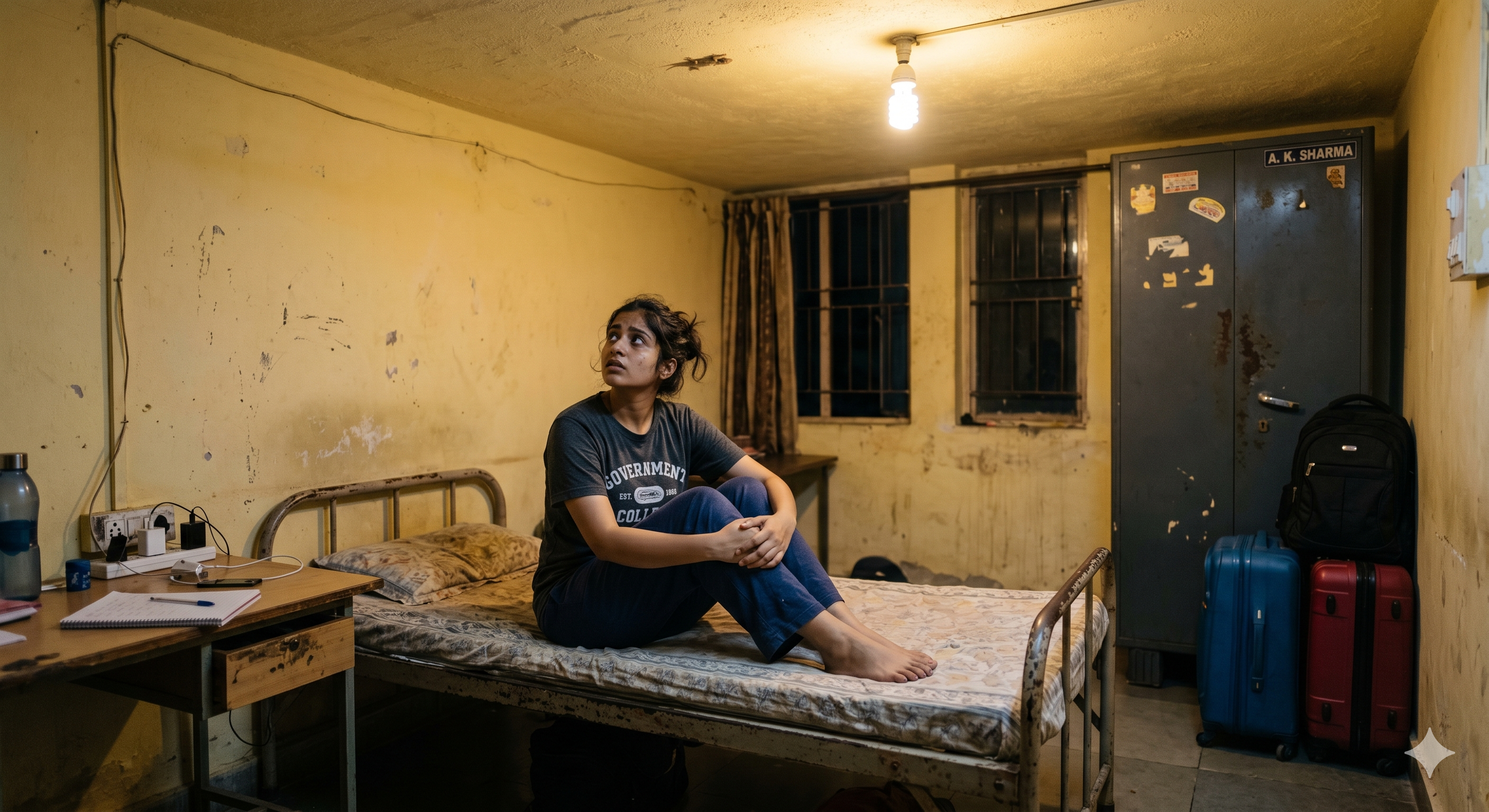
The night before my first day in the hostel, I could not sleep. I had packed and repacked my bag three times. I genuinely believed I was ready. By 9 PM on my first night, I was sitting on my mattress, watching a lizard move across my ceiling, and wondering if I had made a terrible mistake.
By 9 PM on my first night in the room, I was sitting on my mattress, listening to the sounds of a corridor full of strangers, watching a lizard move across my ceiling, and wondering if I had made a terrible mistake.
Nobody had told me that the first week in a hostel is not exciting in the way college brochures suggest. It is exciting in a stranger, more disorienting way. Everything is unfamiliar at the same time: the room, the bathroom schedule, the mess timings, the faces, the city, the food, the rules. You are suddenly responsible for things your parents handled invisibly for eighteen years, like buying soap when it runs out and knowing when to do your laundry before you have nothing clean left to wear.
This guide is for every fresher walking into a hostel for the first time. Not the idealized version of that experience, but the real one, with all the awkward silences, the bad mess food days, and the slow, gradual realization that you are going to be okay.
Quick Summary Box
What this covers: Emotional and practical survival guide for your first 7 days, room setup essentials, and navigating hostel social dynamics.
Key takeaway: Every senior who felt exactly the same in week one is now completely fine. So will you.
The emotional reality of the first 48 hours
Most guides skip straight to practical advice. But the first 48 hours in a hostel are primarily an emotional experience, not a logistical one. Understanding that is the first step to navigating them without feeling like you are failing at something everyone else seems to find effortless.
"The first morning often brings a particular kind of disorientation. You wake up to an unfamiliar ceiling, unfamiliar sounds from the corridor, and a bathroom you are sharing with people you met yesterday."
The comfort of your home routine—your kitchen smell, your family's movements in the background—is completely absent. For many students, this absence hits harder than they expected. This is not weakness. A student who spent eighteen years building a life in one place and then transplanted that entire existence overnight is undergoing a significant psychological transition.
The TownMate Insight: At TownMate, we regularly hear from freshers who feel they made the "wrong choice" in their first few days. Almost all of them write back three weeks later saying they can’t imagine feeling that way now. The first 48 hours are not representative of your hostel year.
Move-in day: The chaos & the setup
Move-in day is simultaneously one of the most chaotic and memorable days of your life. It isn't just about moving bags; it's about navigating the first hurdle of your new independence.
The Queue Strategy
Room allotment, key collection, and warden introductions happen through queues. Do not wing this.
- Pack an "Arrival Kit": A water bottle, snacks, and a power bank.
- The Document Folder: Keep a dedicated, zipped pocket for original documents and passport photos. Panicked WhatsApp messages to parents are the number one cause of move-in stress.
Reality Check: The Brochure vs. The Room
Your room will likely have scuff marks, institutional yellow paint, and a metal bed frame. This is entirely normal. Every senior you meet started in the exact same room. The way you set up your space in the first few hours is what determines how quickly this cold space starts feeling like home.
The Setup That Matters
Resist the urge to collapse on the bed. Your first two hours define your entire first week. Follow this sequence to transform a sterile room into a sanctuary:
Personalize Bedding
Familiar sheets turn a sterile mattress into a personal haven.
Claim Your Desk
Your study zone sets the baseline for your daily productivity.
Organize Essentials
Establishing charging points and shelf space reduces mental friction.
Map Navigation
Locate the bath, mess, and warden's office to avoid evening stress.
Corridor Connection
The first hello is the hardest; doing it now removes all tension.
Social dynamics of the corridor
Everyone is equally new and uncertain, often performing a more confident version of themselves to manage nerves. Here is how to navigate the first-week social landscape effectively.
- Loudness often masks anxiety
- Quietness is internal processing
- Everyone is equally unsure
- Don't lock into early groups
- Timing ≠ Compatibility
- Keep your social circle open
- Social life doesn't come to you
- Nobody finds it effortless
- Take the initiative to reach out
Pro Tip: Break the ice with low-stakes actions. Knock on a neighbor's door for food recommendations or join a group walk to the local shop. These small, intentional moves build your network.
The hostel mess survival guide
Mess food is a polarizing subject. Most freshers start as critics, but eventually, you'll learn that hunger and routine are powerful forces. Here is how to master your relationship with the mess.
- Timings are non-negotiable
- Capture a photo of the notice board
- Sync the schedule to your phone
- Instant oats/upma for early starts
- Roasted chana for study snacks
- Electrolytes for hydration
- Accept the rotating menu
- Avoid forming opinions for 2 weeks
- Adaptability is a survival skill
Pro Tip: Keep fruit like bananas or apples in your room. They are the easiest way to ensure you get something fresh when the mess menu feels monotonous or the food is unidentifiable.
The quiet ache of
first-week homesickness
Homesickness isn't a loud event; it’s a subtle, creeping discomfort. It hits when you realize your room is quiet, the familiar smells are gone, and the "long" semester is just beginning. Understanding that this is a predictable, time-bound phase is the key to getting through it.
The Timeline Reality
Expect days 3-4 to be the hardest. By then, the novelty of "moving in" has faded, and the reality of independence settles in. It is not a sign of weakness—it is simply the brain processing a new environment.
Strategic Disconnection
Keep family calls to a tight 15-20 minute window. Long, constant calls pull you backward into your old life, making it harder to establish a "default" sense of home in your hostel.
Action as Antidote
Idle hours amplify loneliness. Fill your calendar with small tasks—reorganizing your desk, scouting the library, or simple chores—to create the momentum you need to stop feeling like a guest in your own room.
️ Remember: Don't compare your internal struggles to the external performances of others. That "confident" student next door is just as uncertain as you are; they’re just masking it differently.
Voices from the front lines
"Pack for three weeks of real life, not three months of every possible emergency. I ended up shipping two-thirds of my bags back home by day three."
"I spent 2,000 rupees on outside food because I was too picky for the mess. By week three, my stomach adjusted and I realized the mess food was just fine."
"I sat in my room for two days waiting to be included. Once I finally knocked on my neighbor's door, that one small action became my friend group for the whole year."
"The structure was actually a relief, not a cage. The real struggle wasn't the rules—it was learning the natural timeline of being away from home."
"Seniors are not the villains the horror stories make them out to be. My best advice came from second-years who helped me navigate my first anatomy practicals."
The "Hidden" Manual
The Bathroom Algorithm
The morning rush is a math problem. 7:00 – 7:45 AM is the "congestion peak." By shifting your routine just 30 minutes earlier or later, you bypass the queue entirely. Smart scheduling saves you nearly 2 hours of standing in line every week.
The Warden is an Ally
They aren't just an authority figure—they are your fastest route to repairs and emergencies. A simple "hello" on day one pays off when you actually need help.
The Proximity Safety Net
The people within three rooms of you will naturally become your primary social circle. Don't overthink compatibility on day one—investing a little warmth into your immediate neighbors creates the safety net that supports you for the entire year.
The Priority Audit
Daily indulgence in outside food
Prioritize mess meals & save for real crises
Avoiding seniors to prevent 'judgment'
Proactive outreach to second-years for guidance
Claiming maximum shelf space early
Minimalist unpacking; reassess needs in 14 days
Long, multi-hour daily home calls
Brief check-ins; prioritize local network building
Forcing 'best friendships' in 72 hours
Organic social evolution over weeks
The First-Month Trajectory
Move-in Essentials
Set up bed, desk, & charging first. Locate the mess, bathroom, and warden. Greet roommates and neighbors. Eat mess dinner—no matter what it is. Settle in before calling family.
Orientation & Recon
Attend all sessions; they hold critical, unwritten info. Scout the campus and surrounding area with one or two fresh acquaintances.
The Reality Check
Expect the dip. Do not stay in your room alone. Focus on tactical tasks: find the local photocopy shop and general store. This is the 'Difficult Day'—don't fight the feeling, just act.
Establishing Routine
Commit to all three mess meals. Identify a mentor senior. Walk to a new corner of campus—start building your internal map.
The Adjustment Arc
Self-Audit: Is your desk setup ergonomic? Do you have 2-3 reliable social anchors? Have you located the library? These are your success markers.
The Checkpoint
Assess your financial burn rate, your mess-palate adjustment, and your social interactions. If you have your basic routine intact, you’ve mastered the hardest part.
Frequently Asked Questions
What should I bring for my first week in a hostel?
Prioritize functional essentials: bedding you are comfortable sleeping in, a week's worth of clothing, one pair of indoor slippers and one outdoor pair, your toiletries, a power bank, a basic medical kit (paracetamol, antacids, antiseptic cream), and your document folder. Decorative items and non-essentials can be bought after you understand your actual room space.
Is homesickness normal in a college hostel?
Extremely common. Most students experience some degree of homesickness during their first week, including students who were eager to leave home. The intensity typically peaks around day three or four and reduces steadily with familiarity. It rarely persists beyond the third or fourth week without an underlying cause.
How do I make friends in the first week of a college hostel?
Proximity is your greatest tool. Talk to people in your corridor, sit next to new people at the mess, attend every orientation event, and join at least one group activity during the first week. First friendships in a hostel are almost always formed through repeated, low-stakes contact rather than through a single dramatic meeting.
What do I do if I don't like my hostel roommate in the first week?
Give it two weeks before forming a firm opinion. Many roommate dynamics that feel uncomfortable in week one stabilize once both people adjust to the new environment and establish basic ground rules. If there is a genuine incompatibility, speak to the hostel warden about a potential room change after the initial adjustment period.
How much money should I budget for my first week in a hostel?
If your mess fees cover meals, your additional first-week spending should stay below 500 to 800 rupees for incidentals like local transport, minor groceries, and snacks. Avoid shopping for room items or clothing in week one before you understand what you actually need.
Is the hostel mess food really as bad as people say?
Hostel mess food is almost never as bad as the legend suggests, and almost never as good as home cooking. It is institutional food: consistent, filling, nutritionally adequate, and often boring. Most students adjust to it within two to three weeks. The bad days are genuinely bad, but they are not every day.
Can I leave the hostel campus freely in the first week?
This depends entirely on your specific college and hostel rules. Some colleges have strict sign-out procedures. Some have no restrictions for students above 18. Check the hostel handbook and ask your warden directly rather than assuming or relying on what a senior tells you, since rules change.
What should I do if I feel extremely lonely in my first hostel week?
Acknowledge it, first, without judgment. Then take one small social action: knock on a door, sit in the common room, go down to the mess during peak dinner hour. Loneliness in a new environment is a signal to seek more contact, not to withdraw. If the feeling is persistent and intense beyond two weeks, speak to the college counselor.
How do I handle the morning bathroom rush in a shared hostel bathroom?
Shift your morning routine to before 6:45 AM or after 8:00 AM. These are almost always the least crowded windows. Once you figure out the peak times in your specific hostel, adjusting by thirty minutes in either direction resolves the problem completely.
What is the single most important thing to do in the first hostel week?
Set up your study desk properly on day one and introduce yourself to your immediate corridor neighbors before the end of day two. These two actions create the structural and social foundation that makes everything else in the first week easier.
Further reading
Related TownMate articles you may find useful: